
What Is Placenta?
The placenta is a temporary organ that forms during pregnancy and is delivered in the last stage of labour. It connects the developing baby to the uterus through the umbilical cord to deliver oxygen and nutrients, remove waste, produce pregnancy-supporting hormones, and help protect the baby from some infections and harmful substances.
In this post, we aim to help you understand its development, functions, and complications, enabling you to seek prompt care when needed and promote safe maternal and fetal outcomes.
Placenta = Pregnancy Life Support System
The placenta performs several essential physiological functions. It acts as a smart barrier and a bridge between the maternal and fetal circulations.
- Nourish: Transfers sugar, proteins, fats, vitamins, and minerals
- Breathe: Exchanges oxygen and carbon dioxide
- Protect: Transfers maternal antibodies to support newborn immunity
- Balance hormones: Produces progesterone, estrogen, hCG, and placental lactogen
- Remove waste: Filters fetal waste products into the maternal bloodstream for elimination
Placental Growth Milestones: Size and Pregnancy Impact
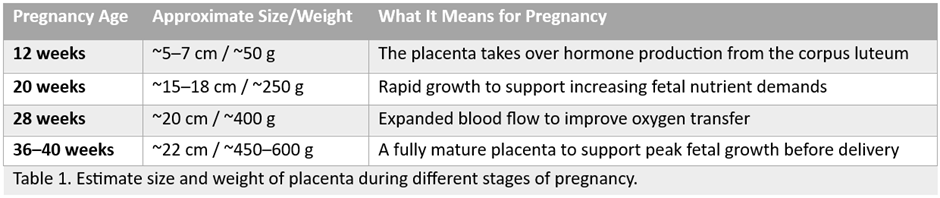
Placental development begins shortly after implantation, when specialized cells from the embryo invade the uterine lining. Its growth generally parallels fetal growth throughout pregnancy to meet the increasing metabolic demands. While exact measurements vary, Table 1 shows typical patterns used in obstetric monitoring.
The following are considered key milestones in placenta development:
- Weeks 0–4: Early placental cells begin forming after implantation.
- Weeks 8–12: Placenta becomes fully established and takes over hormone production that supports pregnancy.
- Second and third trimesters: Continued remodelling, adapting to the baby’s growing needs.
How Doctors Monitor the Placenta’s Growth
Typically, at least two ultrasound studies are completed, one in early pregnancy (before 14 weeks of pregnancy) to assess fetal development (including fetal heart activity), and the other between weeks 18 – 22 to assess placenta size, location, and anatomy.
Additional ultrasound studies may be arranged in case of complications for continued assessment and clinical decision-making regarding the delivery.
Discrepancies between placenta’s actual and expected sizes may indicate an underlying condition that needs to be addressed to prevent possible complications.
For example, a placenta that is smaller than expected may be associated with maternal hypertension or substance use, causing fetal growth restriction, as a larger-than-expected placenta can be linked to maternal diabetes, fetal anemia, or infection in some cases.
Common Substances That Cross the Placenta
Many medications and substances can cross the placenta depending on molecular size, protein binding, and fat solubility.
Examples of substances known to cross the placenta include:
- Some pain medications, including Advil and other similar painkillers
- Opioid medications
- Some benzodiazepines
- Alcohol and nicotine
- Certain antibiotics
- Antiepileptic medications
- Some blood thinners, including Warfarin and direct oral anticoagulants (DOACs)
Because placental transfer can expose the fetus to pharmacologic or teratogenic effects, medication use in pregnancy should always be evaluated using risk–benefit assessment and evidence-based clinical guidance by an expert healthcare professional.
Placenta’s Complications
Because the placenta is a heavily vascularized organ, any complication risks the rapid loss of large amounts of blood, posing a threat to both the mother and the fetus. One of the most important signs of placental complications includes painless or painful vaginal bleeding in the second and third trimesters, which requires immediate medical attention.
Placenta Previa
The placenta covers or reaches the cervix, which can cause bleeding (usually painless) later in pregnancy and may require cesarean delivery.
Placental Abruption
The placenta separates from the uterus before birth, reducing oxygen supply to the baby and causing maternal bleeding (usually painful).
Placenta Accreta Spectrum
The placenta grows too deeply into the uterine wall, making delivery of the placenta difficult and increasing the risk of bleeding. It is usually detectable by ultrasound.
Vasa Previa
A rare but serious condition in which fetal blood vessels run across or very near the cervical opening without protection from the umbilical cord or placenta. It may cause vaginal bleeding (usually painless) and signs of fetal distress.
Retained Placenta
The placenta does not deliver within about 30 minutes after birth, requiring medical treatment to prevent bleeding or infection.
These conditions usually pose a serious threat to the outcomes of pregnancy. As a result, early diagnosis through prenatal imaging and appropriate obstetric management significantly improves outcomes in these conditions.
Conclusion
The placenta is one of the most important organs in pregnancy, simultaneously acting as the baby’s lungs, kidneys, digestive system, and hormone-producing gland.
While placental complications are relatively uncommon, recognizing early signs of complications, such as vaginal bleeding, is essential to seeking timely medical attention and reducing the risk of harm. Monitoring placental growth, position, and function during prenatal visits helps ensure healthy pregnancy progression and early identification of complications.
Please share your experience with any placenta-related complications and how you handled them in your previous pregnancies in the comments section.
Feel free to write to us via email or on social media and mention the subjects that you would like us to cover in our next blog posts.